



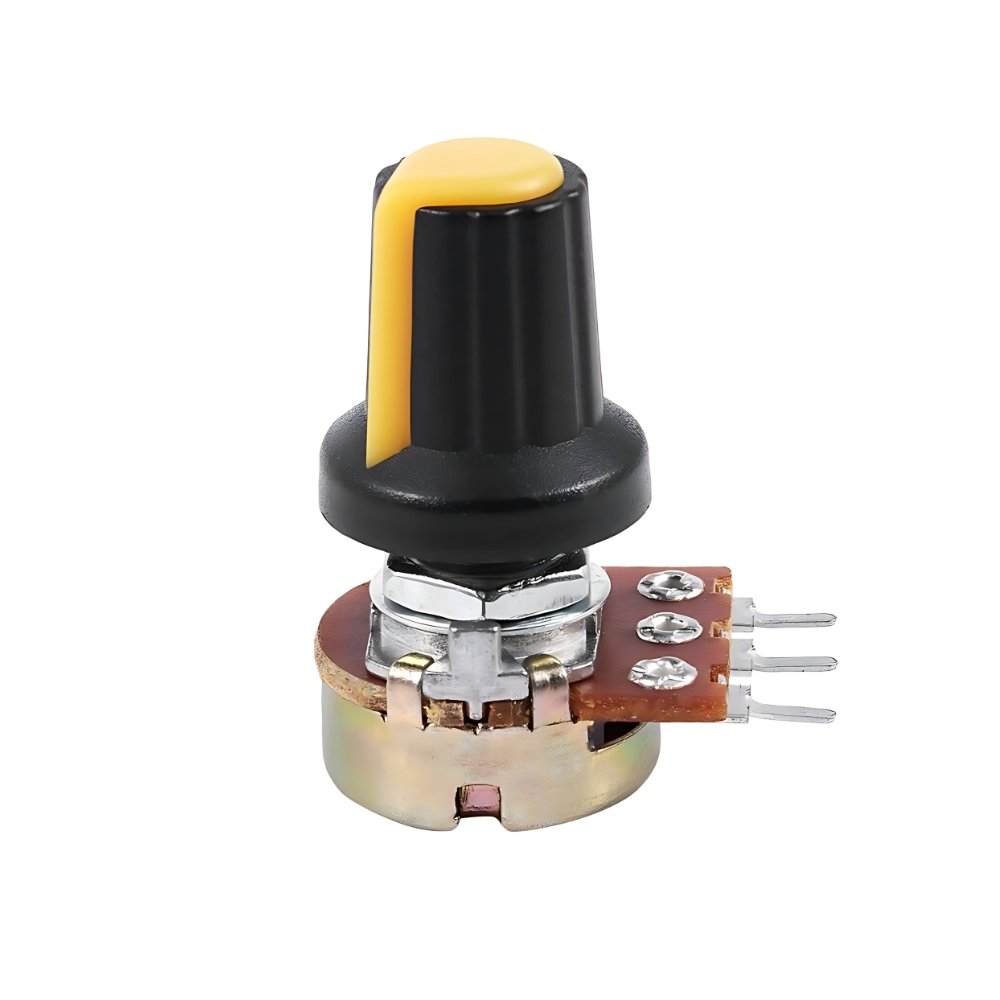
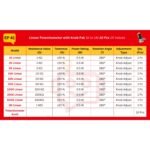
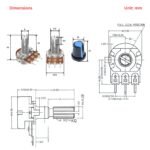
Linear Potentiometer with Knob Pak 1K to 1M 10 Pcs 10 Values

SKU: EP41

Technical Specification:

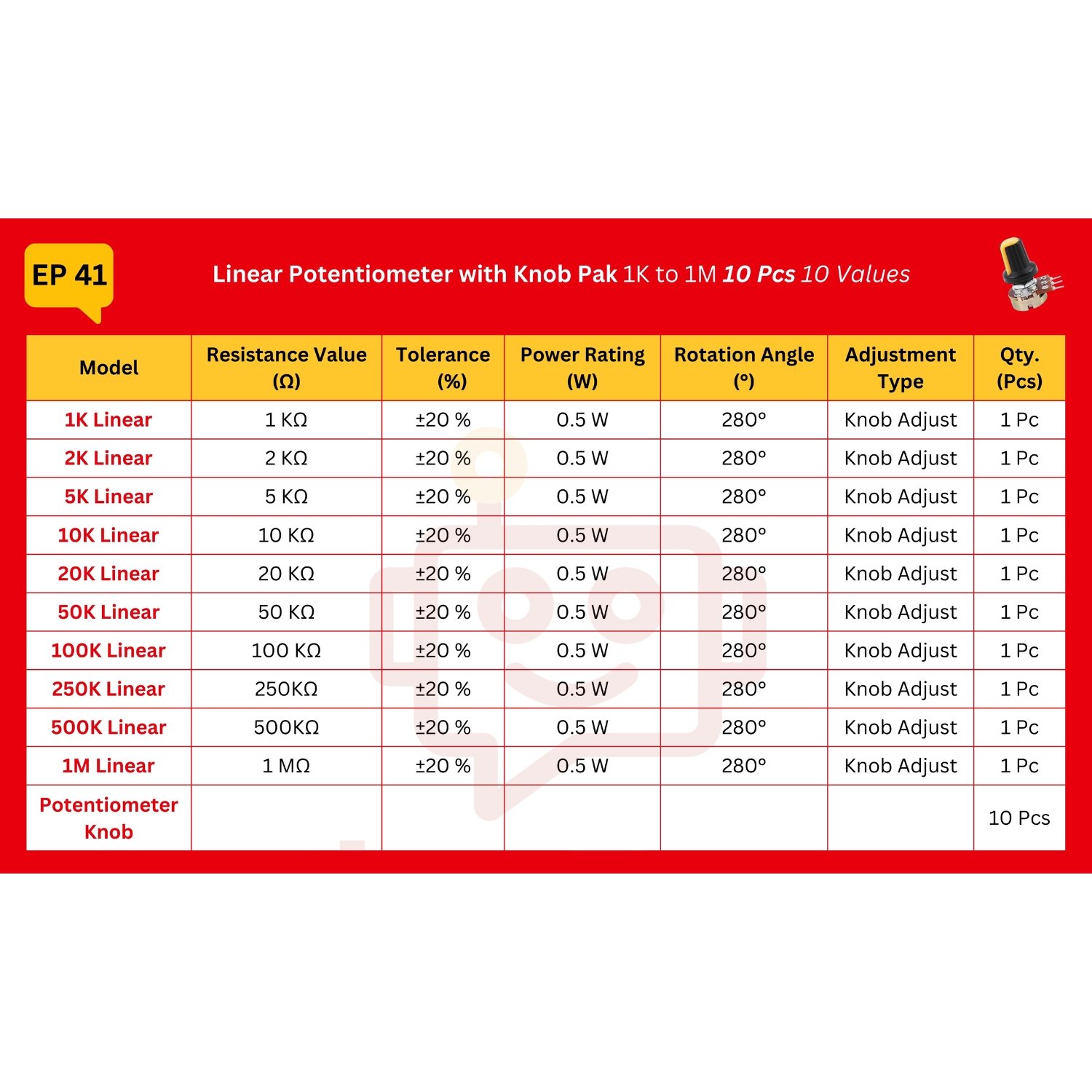
  • Type: Through Hole
  • Model: Linear Potentimeter
  • Resistance Value: 1 KΩ – 1 MΩ
  • Tolerance: ±20 %
  • Power Rating: 0.5 W
  • Rotation Angle: 280°
  • Adjustment Type: Knob Adjust
  • Pak Weight: 100 gm
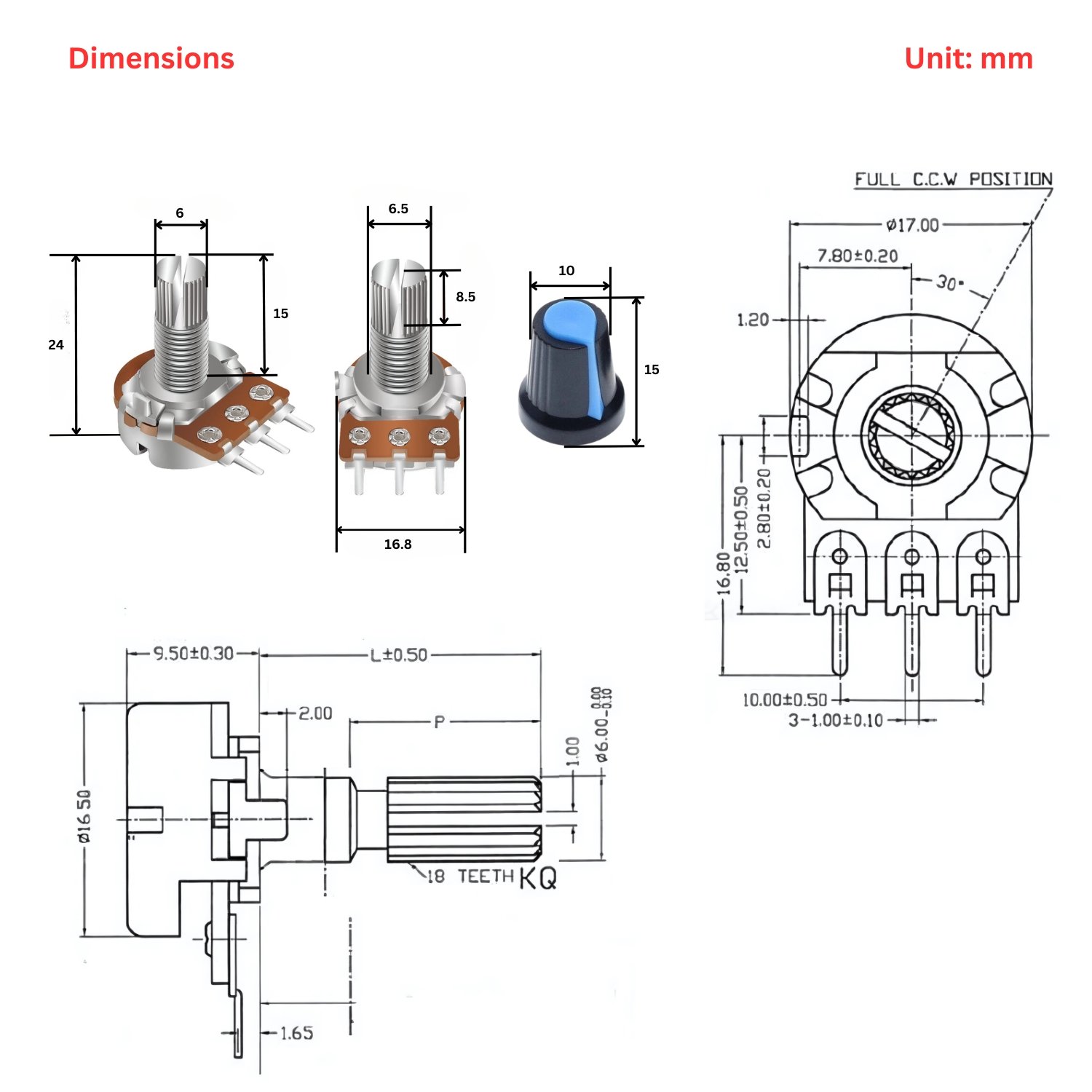
  • Pak Dimensions: 127 x 80 x 24 mm

320.00

Description

Linear Potentiometer with Knob Pak 1K to 1M 10 Pcs 10 Values

The Linear Potentiometer with Knob Pak offers a convenient selection of variable resistors for adjusting voltage, volume, speed and signal levels in electronic circuits. This pack contains 10 potentiometers in 10 different resistance values ranging from 1KΩ to 1MΩ, making it useful for prototyping, repairs and custom control applications.

Each potentiometer includes a knob for smooth and comfortable manual adjustment. Its linear taper provides a consistent change in resistance as the shaft is rotated. The Linear Potentiometer with Knob Pak is suitable for audio equipment, power supplies, motor-speed controllers, lighting circuits, control panels, testing devices and DIY electronics projects.

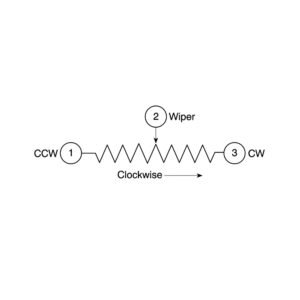
Potentiometer Symbol:
Linear POT Pin Configuration:
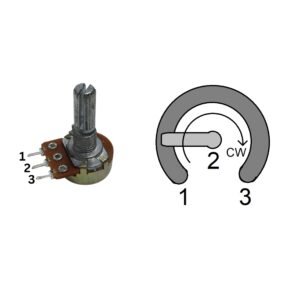
 

  • Pin 1 (Fixed Terminal 1) – One end of the resistive track, usually connected to VCC or GND.
  • Pin 2 (Wiper – Variable Terminal) – Moves along the resistive track, providing a variable output voltage.
  • Pin 3 (Fixed Terminal 2) – The other end of the resistive track, connected to the opposite potential of Pin 1 (GND or VCC).


Explore a wide range of potentiometers for voltage adjustment, speed control, audio regulation and electronic circuit applications.
Package Includes

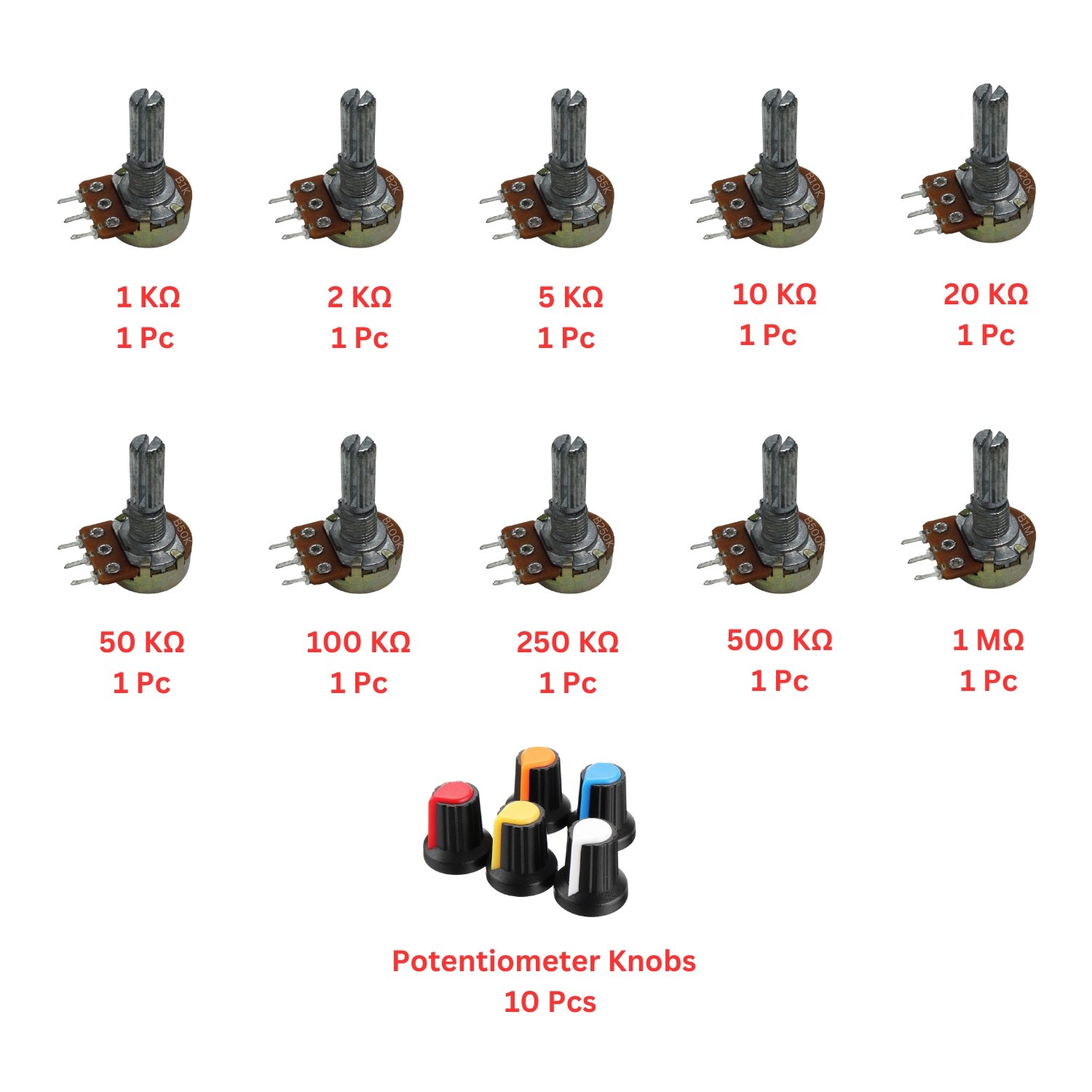
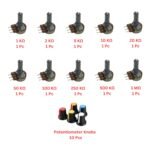
10 Linear Potentiometer with Knob 10 Values

  • 1 K Ω - 1 Pc
  • 2 KΩ - 1 Pc
  • 5 KΩ - 1 Pc
  • 10 KΩ - 1 Pc
  • 20 KΩ - 1 Pc
  • 50 KΩ - 1 Pc
  • 100 KΩ - 1 Pc
  • 250KΩ - 1 Pc
  • 500KΩ - 1 Pc
  • 1 MΩ - 1 Pc
  • Potentiometer Knobs - 10 Pcs 

Features:

  • Precise control of resistance adjustment
  • Linear response for predictable output
  • Simple three-pin design for easy integration
  • Suitable for various applications (audio, signal tuning, motor control)
  • Low power consumption (passive component)
  • Cost-effective and widely available
  • Compact and lightweight design
  • Compatible with analog circuits (e.g., voltage dividers)

Applications:

  • Audio control - Volume and tone adjustment in speakers and amplifiers
  • Light dimming - Brightness control in lighting systems
  • Motor speed control - Adjusting speed in DC motor circuits
  • Sensor calibration - Fine-tuning sensors in industrial and robotics applications
  • Voltage dividers - Used in electronic circuits for variable voltage output
  • Oscilloscope and test equipment - Adjusting signal levels in measuring instruments
  • Gaming controllers - Analog input control in joysticks and racing wheels
  • Medical devices - Used in diagnostic and therapeutic equipment for precise control
1. How do I use a linear potentiometer in a circuit?

It’s used as a voltage divider, adjusting the output voltage by turning the knob.

2. Can I use a potentiometer for controlling a motor?

Yes, they are used to adjust motor speed by controlling voltage or current.

3. How do I connect a potentiometer to a microcontroller?

Connect one terminal to VCC, the other to GND, and the wiper to an analog input pin on the microcontroller.

4. What happens if I use a potentiometer with too high a resistance for my circuit?

Using a potentiometer with too high a resistance can limit current flow and result in inadequate functionality.

5. How do I calibrate a potentiometer in my circuit?

To calibrate, adjust the potentiometer while measuring the output voltage or current, ensuring it matches the required values for your application.

6. Can potentiometers be used for motor control in robotics?

Yes, potentiometers can be used to adjust motor speed or position in robotic systems

7. How do I test if a potentiometer is working?

You can test a potentiometer by measuring the resistance between the terminals with a multimeter as you turn the knob.

8. How do I adjust the range of a potentiometer?

The range is determined by the resistance value; selecting different values will adjust the range of voltage or current control.

9. Do potentiometers have polarity?

  No, potentiometers are non-polarized components, so they can be connected in either direction.

10. Can I purchase specific types individually rather than in a pack?

This product is sold as a complete pack, but individual types may be available separately upon bulk request.

Customer Reviews

0 reviews
0
0
0
0
0

There are no reviews yet.

Be the first to review “Linear Potentiometer with Knob Pak 1K to 1M 10 Pcs 10 Values”

Your email address will not be published. Required fields are marked *

1 2 3 4 5
1 2 3 4 5
1 2 3 4 5